
Monitoring XLH Throughout the Journey
Learn about monitoring XLH progression and symptoms across the life span.
Regular Tests and Check-ups
XLH symptoms vary from person to person, change over time, and can be different in children and adults. Regular checkups help XLHers and doctors detect changes, address symptoms, and manage the condition.1 Below you’ll find information about tests and assessments that may be done to monitor XLH.
The frequency of these tests, and the age at which they are performed, will vary based on each person’s unique experiences.2,3 These experiences include symptoms, severity, and progression of disease, medical history, medications, and others.2–4 If you have questions about which tests are needed, always check with your or your child’s doctor.
The information provided here is not intended to be medical advice, but as a resource to help you know about available tests when talking with your doctor.
If you have questions about monitoring and tests, your healthcare team should always be your source of medical advice.
For both children and adults, common tests for XLH monitoring include2,3:
Blood tests
See the Diagnosing XLH section for more information about blood tests relevant to XLH care.
Urine tests
To check calcium, phosphate, and creatinine levels
Physical exam
To test physical function, check for pain and stiffness, assess legs, spine, and blood pressure- For children, these exams also include height and growth assessments, plotting progress on both traditional and XLH-specific growth charts. Head size is also measured
Other tests and exams that may be ordered include2–4:
- X-rays to check bones for rickets (only for children who are still growing), leg bowing, knock knees, and fractures or pseudofractures
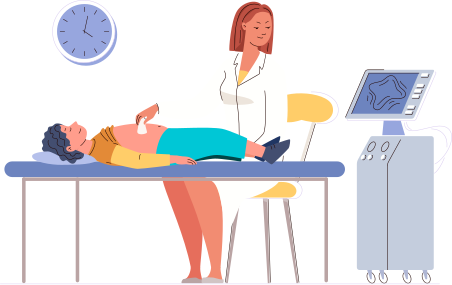
- Kidney (renal) ultrasounds
- MRIs to look at the brain and/or spine
- Hearing tests
- Neurologic tests to check how the brain and nerves are working
- Dental exams
Decisions about monitoring XLH are made in partnership with you or your loved one’s healthcare team. Doctors may choose to monitor XLH with all of these tests, some of these tests, and tests not listed here. The tests may also change over time.
The XLH monitoring recommendations in this section are from the international clinical practice guidelines for children and adults with XLH. XLH care teams may choose to depart from these recommendations as they deem appropriate. Doctors will individualize XLH management, testing, and frequency of visits based on each person’s unique situation.
Keep reading to learn more about the different tests and assessments at different ages. For more information about managing XLH care, see the Diagnosing and Managing XLH chapter.



To make the most of my doctor’s appointments, I try to come in with a list of questions or noting any new symptoms. I find you leave an appointment and you have a million questions you forgot to ask, so coming in prepared is the best way.
Danielle
Living with XLH
XLH Monitoring in Children
Children and teens generally will see their doctors to monitor XLH symptoms every 3-6 months.3 XLH symptoms continue even after children stop growing in their teen years.5,6 It is important for children to continue seeing their care team even as they get older.
Helpful Tips
Monitoring pain in babies7
- Recognizing pain in babies can be challenging since crying is their main way to communicate. Signs of possible pain include:
- Crying that sounds unusual
- Crying that continues after needs are met, such as diaper changing and feeding
- Becoming unusually quiet, still, or avoiding eye contact
- Pulling legs toward the stomach while crying may signal a serious medical concern or colic
Monitoring pain in toddlers7
- Observe the child for evidence that they may be having symptoms they cannot vocalize. Look for certain types of body language, such as:
- Clutching or pressing on the painful area
- Listen to what toddlers say, including words such as “owie,” “ouch,” and “hurt” which could indicate feeling pain
Monitoring pain in children and teens of any age7
- Watch for behaviors that may signal pain, such as:
- Favoring one arm or leg
- Guarding an area
- Reduced physical activity
- Changes in eating or sleep patterns
- Irritability and/or crying
- Look out for physical signs such as:
- Gasping
- Wincing
- Sweating or flushed skin
- Rapid breathing
Questions to consider asking children about pain and other symptoms
- Because children may not speak up about their symptoms, it’s important to check in with them often.7 Consider offering simple, guiding questions to help them express what they feel, for example8:
- Can you point to where it hurts?8
- Can you use words to describe your pain?8
- Is it sore, itchy, burning, aching, or something else?8
- Can you draw what the pain looks like?7
- If you suspect your child is in pain or has a medical concern, contact their care team
Talking to teens about their XLH care
- Talk regularly with teens about taking on some of their own care responsibilities, like speaking with the doctor on their own5
- Start planning for the transition from pediatric to adult care both within the family and with the healthcare team5
Suggested XLH Monitoring Recommendations: Children3
Every 3-6 months
- Physical exam, including for bone issues
- Dental exam to check for infections
- Height (for children 2 years old or younger) and growth assessments, weight measurement, and head size test
- Lab tests, including measurements of:
- Serum phosphorus
- Calcium
- Alkaline phosphatase (ALP)
- Kidney function (creatinine, estimated glomerular filtration rate [eGFR])
- Parathyroid hormone (PTH)
- Urine calcium/creatinine
- Urine phosphorus/creatinine
Every 6-12 months
- Dental exam (for children 1 year old or older, after the teeth start to come in)
Annually
- Vitamin D (25-hydroxyvitamin D) measurement
- Kidney (renal) ultrasound (as determined by the doctor)
Less often or as needed
- Hearing exam
- Neurologic tests and eye exam if there are symptoms such as headache, vomiting, or a decline in developmental milestones (e.g., talking, thinking, or social skills)
- X-rays to check for fractures or joint injury
- X-rays to check for rickets
XLH Monitoring in Adults
In most cases, adults will see their doctors less frequently than children, usually every 6 to 12 months.2,3 These visits will include discussion of any new or worsening symptoms and pre-existing issues.2
Helpful Tips
- It’s important to understand ways XLH can change over time and how symptoms may affect daily life1
- Young adults will need to transition from pediatric to adult care, as well as prepare to transition off their parents’ health insurance5
- Older adults may need to consider changing mobility needs, new physical limitations, and the risk of falls that can cause fractures2,9,10
Suggested XLH Monitoring Recommendations: Adults2
Every 6 to 12 months
- Dental exam
- Physical exam to check bones, joint stiffness, and arthritis
At least once a year
- Physical exam to check for pain and tenderness and to understand fracture history (any broken bones and how they happened)
- Height, weight, Body Mass Index (BMI), and blood pressure assessments
- Documentation of dental history, including dental abscesses or periodontitis (gum infection)
- Lab tests, including measurements of:
- Measurements of serum phosphorus
- Calcium
- Alkaline phosphatase (ALP)
- Kidney function (creatinine, estimated glomerular filtration rate [eGFR])
- Parathyroid hormone (PTH)
- Vitamin D (25-hydroxyvitamin D)
- Urine calcium/creatinine ratio
- Urine phosphorus/creatinine ratio
Annually
- Kidney (renal) ultrasound (as determined by the doctor)
As needed
- Comprehensive neurologic exam if brain or nerve problems are present
- X-rays for bone pain to check for fractures or pseudofractures, if bone pain is present
References
- Dahir, K., et al. X-linked hypophosphatemia: a new era in management. J. Endocr. Soc. October 14, 2020. doi: 10.1210/jendso/bvaa151.
- Khan, A, et al. X-linked hypophosphatemia management in adults: an international working group clinical practice guideline, J Clin Endocrinol Metab, Volume 110, Issue 8, August 2025, Pages 2353–2370, https://doi.org/10.1210/clinem/dgaf170.
- Ali DS., et al. X-linked hypophosphatemia management in children: an international working group clinical practice guideline. J Clin Endocrinol Metab. Published online February 17, 2025. doi: https://doi.org/10.1210/clinem/dgaf093.
- Haffner, D., et al. Clinical practice recommendations for the diagnosis and management of X-linked hypophosphataemia. January 15, 2025. Nat Rev Nephrol 21, 330–354 (2025). https://doi.org/10.1038/s41581-024-00926-x.
- Dahir K., et al. Health care transition from pediatric- to adult-focused care in X-linked hypophosphatemia: expert consensus. J Clin Endocrinol Metab. November 6, 2021. doi:10.1210/clinem/dgab796.
- Haffner D., et al. Clinical practice recommendations for the diagnosis and management of X-linked hypophosphataemia. Yearbook of Paediatric Endocrinology. Published online September 12, 2019. doi:https://doi.org/10.1530/ey.16.5.12.
- PainScale.com. Recognizing pain signals in young children and non-verbal individuals. 2017. painscale.com/article/recognizing-pain-signals-in-young-children-and-non-verbal-individuals.
- Mathews, L. Pain in children: neglected, unaddressed, and mismanaged. Indian J Palliat Care. 2011 Jan;17(Suppl):S70-3. doi: 10.4103/0973-1075.76247.
- Skrinar, A., et al. The lifelong impact of X-linked hypophosphatemia: results from a burden of disease survey. J Endocr Soc. May 7, 2019. doi: 10.1210/js.2018-00365.
- NIH National Institute on Aging. Falls and fractures in older adults: causes and prevention. September 12, 2022. www.nia.nih.gov/health/falls-and-falls-prevention/falls-and-fractures-older-adults-causes-and-prevention.